Thursday, June 21, 2012

Melanchoila Film Review


Melancholia is a Beautiful Disaster
Heather Hardison, Ph.D.


I attended the Memphis Indie Film Festival in November 2011, and one of the most talked about and anticipated films was Melancholia starring Kirsten Dunst, Alexander Skarsgard, Kiefer Sutherland and Charlotte Gainsbourg. I was not able to see it at that time since it debuted the day after I attended the festival, but I have been wanting to see it ever since. I found the trailer and poster intriguing, and the idea of witnessing the characters’ reactions to facing the end of the world was compelling to me on a psychological level. Given the film’s storyline, I assumed that I would find it more captivating than I did. I am drawn to films that chronicle the human condition; therefore, this concept seemed very promising initially. I believe the excruciatingly slow pace of the movie killed any excitement I had leading into this viewing. This dramatic sci fi thriller written and directed by Lars von Trier clocks in at a whopping 2 hours and 16 minutes, but it felt like it drug on for 4 hours. This film needed some major attention from the film editor to make the film more tolerable, and I was begging for the movie to come to a close about an hour into it.


The story unfolds too slowly without even a hint or explanation about what is actually occurring in the world or within the character’s minds; so I found myself feeling quite lost throughout the first hour of the film. I did something that I never do, and I cheated by looking up the plot on imdb while watching the film to help give me some idea of what I was watching. I usually like to go into a movie without too much knowledge about what happens and without seeing too many detailed trailers because it ruins the buildup for me, but with this film I just felt like I was missing some important piece to the puzzle right off the bat. There were numerous times throughout Part 1 that I was tempted to abandon the film due to frustration. I was very glad that I was screening this movie in my own theater because I was pretty vocal with my frustration over Part 1. If I had been in a movie theater I would have most likely walked out. From reading other reviews, it appears that many struggled over whether to abandon the film or try to stick it out through those torturous long scenes that didn’t amount to anything; so at least I wasn’t alone in that regard.


The film is presented in two parts. During the first segment we attend the wedding of Justine and Michael (Dunst and Skarsgarrd), and we notice right away that Justine is suffering from some sort of clinical disorder. She leaves the reception multiple times to wander off onto the golf course, to take a nap upstairs, and soak in a bath, all while her wedding guests are waiting on her to return to cut the cake. We are even introduced to her neurotic mother, which gives us an idea of the mental instability that runs in this family. Justine’s mental state starts to decompensate more as the film progresses. 


She ends up sleeping with a stranger on the golf course on her wedding night, and her new husband leaves her at the end of the reception stating that “things could have been very different.” In a very cryptic way Justine replies, “Yes, Michael they could have been, What did you expect?” We are not sure what any of this means in relation to the developing story. In fact, there are several unanswered questions that I’m still wondering about. Why did Justine desperately need to talk to her father after the wedding reception and what was the reason for Justine to open all those art books to display them on the shelves in the study? I was sure at the time that this would come up again at the end of the movie and have some symbolic meaning based on the specific images that she chose to display from the books, but I never saw any clues to that hidden meaning.


And why was John repeatedly asking people how many holes they had on their golf course? I think there was a shot at the end where Claire is running on the 19th hole, which seemed pretty random. I’m still not sure if the beginning sequence really happened or was a premonition that Justine had about what was to come. There were scenes in the beginning where they all wore different clothes from the last scene; so it seems that all of these scenes did not actually take place in reality. Surely all of these small details fit in to the mysterious plot somehow, but I must have missed the significance along the way.


We aren’t let in on the secret of what is really happening until Part 2 of the film, and by then most of the audience has probably either walked out or become so frustrated with the film that there is no way to salvage any interest whatsoever. Mr. von Trier must not buy in to the notion of grabbing the audience’s interest right away to keep them engaged. Normally, I’m ok with a slow beginning, if I know it is going to lead somewhere meaningful, but with this film I had no assurance that would happen; so it felt like it was a huge waste of time.


There were a few features of the film that delivered. Kirsten Dunst’s performance was stellar as the young bride that is battling a severe case of clinical depression that left her lifeless during some intense scenes. The heaviness of these moments was spot on with the depiction of how draining severe clinical depression can be. From the dialogue between Justine and Claire we get the notion that Justine has chronic depression and “makes scenes” during her most severe episodes. Claire reminds Justine on her wedding day that she promised not to make a scene at the wedding reception that Claire worked so hard to arrange, but it appears that their neurotic mother’s dramatic outburst at the dinner table about how she doesn’t even believe in marriage has triggered Justine’s mood to decline rapidly. She regresses the rest of the night into an almost catatonic depressive state by being almost unresponsive during a nap on her nephew’s bed and appearing lifeless in the bath. We are not sure at this time if there is anything specifically depressing or worrying Justine on this day. It may just be that this is a chronic condition, which could be worsened by the added stress of the wedding. We are not aware if she knows about the impending doom that is heading for Earth. The level of depression depicted in this film is so debilitating that Justine’s character would be a good candidate for Electroconvulsive Therapy (ECT). It’s a mystery how she even manages to make it through the day.


In part 2 Justine’s depression worsens, and she comes to stay with her sister, Claire, and her husband, John in a stunning mansion in the countryside. Here, they are isolated from civilization, and they have a front row seat for the looming disaster that will bring about the end of the world. We finally learn that a planet called Melancholia has been hiding behind the Sun, unseen for years, and is suddenly heading for a collision with Earth. The characters in this film only have a few days notice of this doomsday event, and the second part of this film features their reactions to the approaching planet that will bring about the end of their existence and the world around them. Fear takes over, and as the seconds tick down to the collision, Claire loses her composure, and Justine reveals that she “knows things about the world” and has known that this would not end well for quite some time. After this revelation, Justine suddenly appears calmer and more rational than either Claire or John. Claire’s husband, John who assured Claire that it would be a near miss instead of a collision ends up taking the easy way out once he realizes that Melancholia will in fact wipe the Earth out. He disappears and Claire later finds him in the horse stables dead, as he took her sleeping pills to overdose so that he wouldn’t have to endure the catastrophe with the rest of his family. 


When Claire finds her deceased husband, she starts to really panic. It appears that part of her is realizing that there may be no hope left, and another part of her desperately tries to run from her fate in a very intense scene where she tries to escape with her son amidst a violent hail storm on the golf course. She finally comes to the realization that nothing can be done and breaks down emotionally. As Claire becomes unable to cope with the magnitude of the situation, Justine puts on a strong face for her nephew, Leo, and attempts to calm his fears by offering to build a magical cave that will "protect" them from harm.


I certainly appreciated the idea of this story, especially given that 2012 is full of many conspiracy theories chocked full of feared cataclysmic events that many fear will bring about destruction of the world. Thus, the concept of the film works for me, but the flaw occurs with the pacing of the film and the extent of the mysterious events that span too much of the film and are never fully explained. If we had been given more information earlier in the film, I think this film could have given us a chance to be captivated by the developing story. Instead, I felt frustrated and bored very early on. Combine that with the frustration of getting nowhere by the halfway mark and that equals a missed opportunity in my eyes. I usually like to watch movies at least twice when reviewing them, but I don’t think I could sit through this movie again unless I skipped those dull, silent moments that are peppered throughout the entirety of the film.


I did appreciate the parallelism of the planet name, Melancholia, and Justine’s depression, which I found very apropos. Although she certainly suffers from a much more intense disorder than benign melancholy, but it was a nice tie in. An interesting development in the story occurred as the planet hurtles towards Earth because the family becomes more detached and distant from each other. In many cases families draw closer together in a time of crisis, but this family descends into a state of heavy despair and is almost ripped apart until the last few minutes of the film when Claire, Justine and Claire’s son, Leo, huddle under their “magic cave” to meet their fate together as a family unit. This movie is very dark and solemn; so there is no happy ending, and there is no last minute miracle to save the world. This film depicts a very hopeless situation where the inhabitants of Earth are under a dire threat with no option to even attempt to save themselves or their world.


This film’s storyline is very similar to a popular doomsday theory of “Planet X” also known as “Nibiru.” Nancy Lieder, claimed in 1995 that she was contacted by extraterrestrial beings about a collision or near miss between Earth and a very large planet. She stated that she was chosen to warn mankind about this disaster that would cause a pole shift on Earth and destroy most of humanity. She first claimed that this would occur in 2003, but changed the details of her story once that date passed. Reputable scientists have debunked this theory and state that there is no such planet in the Milky Way Galaxy that is a threat to Earth. Despite the lack of scientific evidence to support this Planet X theory, many online groups still believe this is a realistic threat. Announcing his company's purchase of the film, the head of Magnolia Pictures said in a press release, "As the 2012 apocalypse is upon us, it is time to prepare for a cinematic last supper." It is clear that companies and the film industry are cashing in on these panic driven theories as we are in the middle of 2012, one of the most controversial years in our human existence due to the many theories related to the end of the Mayan calendar and fear of debilitating solar flares. I predict this won’t be the only disaster film released over the next year.


Along with the strong acting performances, I also give high praise for the imagery in this film. There are several breathtaking scenes that are unique only to a film like this. It’s those moments that stick in your mind days after the film. Specific scenes that still stick out in memory include: the image of our moon and Melancholia lighting up the same sky at night, the collision of the planets at the beginning and end of the film, the opening scenes foreshadowing the chaos to come, and the nighttime scenes where Melancholia is very visible in the night time sky as it approaches closer to Earth. 


Among my favorites as well are the scenes where Claire is constantly checking to see if the planet is moving closer or further away using the wire tool that her son made just for this occasion. There is something so very compelling about those scenes. They are wrought with such anticipation as you wait to see whether what she finds brings relief or more panic. As she begins to gasp for air due to the atmospheric changes I, too, felt sympathy pains and felt out of breath along with her. Kudos to von Trier for capturing her panic in a way that transcends the screen and enters into the very room where the audience is watching. This film has a very visceral impact.


Mr. von Trier has stated, “No more happy endings;” so that tells you right away that he isn’t playing around. Also, the opening montage displays the chaos and destruction that you can expect from this film; so you know right away that this story won’t end well. I’m not sure why he chose to show these scenes first as opposed to ending with a bang, but I can tell you that even with those opening scenes showing the collision, you still feel lost when we jump right in to the wedding reception.


You are never sure of the timeline in relation to the wedding date, Melancholia’s approach, and Justine’s stay with her sister. It could be a matter of a few days in between the two stories, or it could be weeks or months. Nothing is discussed in relation to each other. It’s all very vague and mysterious. We aren’t even sure how long they have known about Melancholia’s approach. At one point in Part 2, Claire and John talk about having 5 days until the near miss or collision, but they don’t discuss how long they have known about this event. It’s also not clear if this information was known at Justine’s wedding or not. She seemed to have a lot on her mind at the reception and was feeling the heaviness of something, but the other guests don’t appear to know. Justine does reveal later that she “knows things;” so it is possible that she knew about this outcome before the others, which calls in to question why she would go through with a wedding with the end of the world nearing.


I wouldn’t necessarily classify this film as a disaster film because much of the film is not focused on the actual catastrophe that is brewing. This story seems to be more of a character study of both Claire and Justine. We see how their characters evolve over the course of this event and how their reactions differ from each other. Prior to working on this film, the writer and director reported that he suffered from clinical depression. which is probably why the portrayal of the despair and distress are so accurately captured. As a psychologist, I was very pleased to see that this aspect of the film was covered flawlessly. Kirsten Dunst delivered on her downward spiral into the depths of despair, and Claire’s rapid decompensation at the end as she is losing her grip is to be praised as well.


Part 1 and 2 feel like two separate films. The wedding reception feels more like a wedding video shot by one of the guests; so it feels as though we are in attendance. There is an intimate feel when we are alone in the room with Justine as she takes a nap with her nephew and a bath upstairs while her guests are downstairs enjoying her reception. We feel as if we are spying on very private moments with her when she finally lets down her guard and disrobes from her façade and phony grin which she forced upon herself for the sake of keeping up appearances on what should be the happiest day of her life. Her deep depression starts to become harder to fight and is dragging her down to the point where she can’t be aroused from her nephew’s bed when she is summoned by her brother in law and sister to rejoin the reception as the guests are waiting for her to cut the cake. She has become so weak from the heaviness of the depression that we see her lying lifeless on the bed and later in the tub. Mr. von Trier captured the strain of depression perfectly here, which led me to think that there was hope for the rest of the movie. There were glimpses of brilliance from von Trier, but he wasn’t consistent with these touches throughout, which is a shame.


I did not enjoy the film as a whole due to the pacing issue, but I did enjoy those sparkling moments where everything was aligned. If these moments had been strung together in a different way, then this film most definitely would have been more of a success. This was my first viewing of a Lars von Trier film, which may be the reason that I was caught off guard because I had no idea what to expect. From reading other reviews from both critics and audience members, I now understand that this type of film is his trademark, and his fans probably know what kind of ride they are in for when sitting down to watch a Lars von Trier film. Next time I will be more prepared.


This film is really only targeted for the independent/art film lover. If you don’t enjoy independent films, then I would encourage you to pass on this film. If you are somewhat adventurous when it comes to trying out new genres, then you might want to give it a go, but be prepared for what you are about to see. This is a very slow moving film that will leave you very frustrated at least during the first hour of the film, and it will leave you with a lot of unanswered questions, which can be quite unsatisfying. I would encourage you to go in to it with the goal of admiring the imagery of the film and the performances by Dunst and Gainsbourg. Those are the film’s strongest attributes. Many will be bored to tears, but maybe a few will walk away being moved emotionally and visually impressed. It is a very thought provoking piece of work. You will find yourself wondering how you would face such a catastrophic event and how you would spend you last few days on earth. The music chosen for this film was Wagner from Tristan and Isolde, which is very moving and matched perfectly with the intensity of this film. Some reviewers are stating that this is von Trier’s best work, and if that is so then I’m not looking forward to his other works. I have a feeling that it is all in how you perceive this movie and that everyone will get something different from this film. It is definitely different from other disaster films in that there is no news coverage and no mass hysteria. We only see this one family through Part 2; therefore, it is a very intimate and isolated reaction to the end of the world compared to past high energy, mass chaotic conclusions to disaster flicks.


The only way I could see this film as a success would be to turn it in to a short film lasting 30 minutes and covering the major plot points while cutting out the painfully long silent scenes where nothing significant is taking place. If he included the opening montage with the last few minutes of the film, it would be very powerful and satisfying. There were way too many scenes where one character is lost in thought for several minutes, and no dialogue or notable events take place. Obviously, we all have these mundane moments throughout our day, and it is very realistic to portray scenes that are not action oriented in order to capture the realistic side to our everyday human lives. However, to keep any sort of interest level going, there needs to be some point to this type of scene; otherwise, it needs to be cutout of the film to move things along at a faster pace. There were simply too many of these scenes in one film. It’s a shame that more of the focus was not given to the aspects of the film that shined, such as the actor’s performances and the cinematography, as that could have easily saved this film. With some proper editing this film could be shaped into a much more riveting piece of work. 


From a psychological standpoint, I enjoyed the focus on the dysfunctional, broken family and how they interact in the face of this looming tragedy. Much of the family is very unempathetic with Justine’s condition, and it is hard to watch as they are overtly uncaring and dismissive of the depth of her struggles.

2.5 stars – Bizarre but at the same time mesmerizing, Too artsy and slow paced for the mainstream audience

Melancholia Trailer


Opening Sequence to Melancholias

Thursday, May 10, 2012

The Avengers Movie Review


The Avengers Movie Review 
Heather Hardison, Ph.D. 

6 Super heroes = One Badass SUPER Movie!!


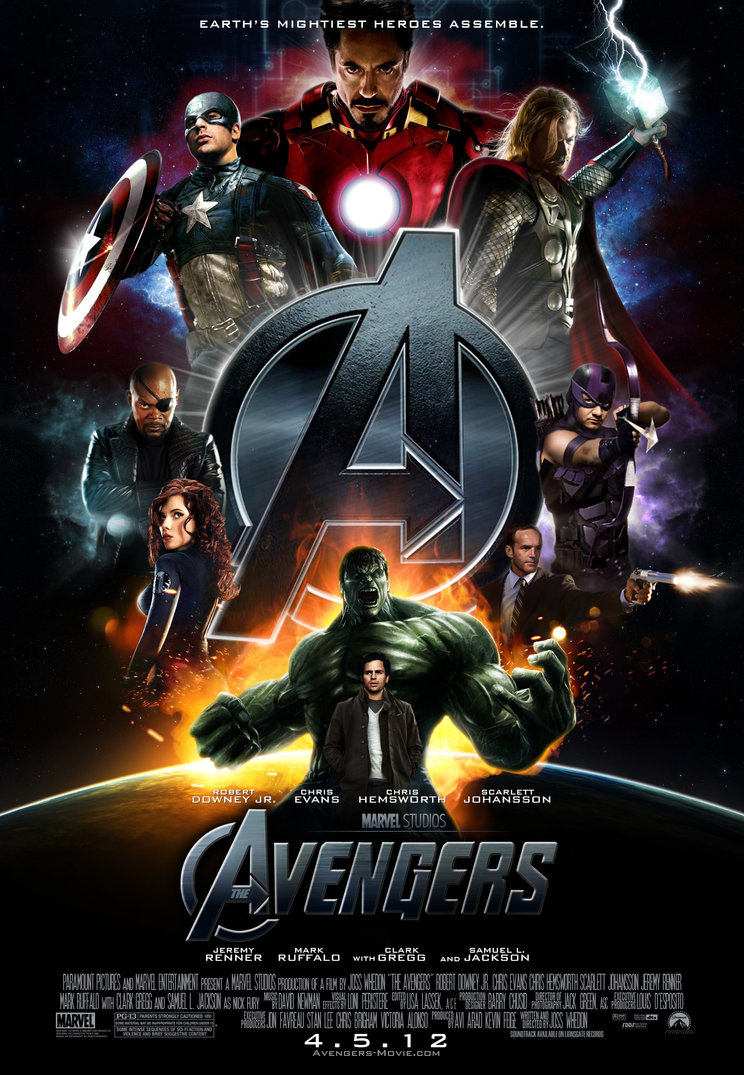
The Avengers flew in and slayed the boxoffice this weekend. It’s not hard to see why this Marvel creation now has the record for the biggest movie opening EVER! With rising ticket prices and the inconvenience of going to a loud, crowded theater, there are very few films that will draw me out of my fabulous home theater into a less comfortable local theater. BUT this movie is definitely the exception as I’ve been waiting to see this film for at least 4 years since Iron Man first flew into my life. With a star studded cast of all of our favorite super heroes and the witty one liners penned by the brilliant Joss Whedon (Writer/Director), it was the perfect combination for everyone, not just geeks and comic book lovers!! 


Robert Downey, Jr. got the most laughs and has perfect delivery of quick comebacks and sarcastic jabs at the other heroes. Iron Man just soars above the rest in my opinion. Every time he came on screen the audience seemed to perk up and was more engaged. 


Some of the most impressive scenes included those where Tony enters or leaves the Stark tower and his suit magically assembles or detaches from his body as he is moving forward in one seamless motion. The intricate detail that they put into each piece of the moving suit is astounding and mesmerizing. The suit appears as if it is alive. My husband and I just kept shaking our heads at these mind blowing scenes. The formula of RDJ as Iron Man and Joss Whedon behind the camera can't make being a super hero look any cooler than this. Downey just has a magnetism about him that equals box office gold these days. I'm eagerly awaiting Iron Man 3 which is due out in 2013. Here's to hoping that RDJ never takes off the suit! No one else could ever step into those metal boots of his. 


The best casting choice was the decision to include Black Widow in this epic flick. A little estrogen was the perfect touch with this testosterone heavy power team. Joss Whedon is a master when it comes to writing for a group of strong characters and especially for strong female leads like Buffy the Vampire Slayer; so he is no stranger to girl power. He has a way of balancing all of the character’s strengths, and he highlighted each in a way that felt unique and powerful. He gave each hero his or her due and explored enough of their back story to make them all interesting and familiar even with Hawkeye and Black Widow who have not had their own Marvel installment. Although after this movie they should seriously think about honoring Black Widow with her very own film. 


Scarlett Johansen wove a “web” that could easily spinoff in to her own franchise. She was incredible and held her own with the other heavy hitters on screen. She was the most impressive as a standout star for this adaptation. Her fight scenes were flawless! It was very reminiscent of Buffy scenes except that Whedon has come along way from the old Buffy episodes where he wasn’t hiding the fact that stunt doubles were used in the battle scenes, which is a pet peeve of mine. Here, the fight scenes were stellar, and you had to keep your eyes glued to the screen in hopes of not missing a single second as a lot was going on all at the same time. 


One of the opening scenes with Black Widow being summoned by S.H.I.E.L.D. (Strategic Homeland Intervention, Enforcement and Logistics Division) while in the middle of an “interrogation” was priceless. That scene let me know early on that we were in for a wild ride with this film and it didn’t disappoint. Scene after scene and fight after fight led up to one mighty battle in the end. Let's just say that you want Black Widow on your side as she is a serious force to be reckoned with. I'll never see Scarlett again without thinking of her in this role, and I hope that the rumors are true that she will be suiting up once again in Iron Man 3. The banter between her and Stark is always amusing. 


I was skeptical about Mark Ruffalo taking over the role of the Hulk, but he was SMASHING! His quiet demeanor as Bruce Banner played to his own strengths as an actor as he adopted a very zen-like approach to this role. But his most exciting scenes came when his overcontrolled anger was finally unleashed with fervor which comes in handy when you are fighting an army of alien villians. As Stark says, “Well, we have a Hulk!” Once Banner transformed into the Hulk, the character just came alive and had the theater in stitches as he tossed aliens aside and even knocked Thor over like a bowling pin. That was a nice touch by Joss! Whedon's sense of humor definitely came across in numerous aspects of this film. His touch is always noticeable. My hope is that he will sign on to continue to work with the Avengers franchise as there will surely be sequels to come.


In this film the Hulk does what he does best which is to smash anything and everything in sight until there is nothing left. Thor tries to ease the Hulk’s rage at one point by asking him to stop and try to think and reason before smashing them all to smithereens. As if that's possible for him to think rationally when in a rage. That’s what makes his character so fun to watch. He’s like an overgrown two year old who has the strength of all the giants in the world. His best line was at the very end when he revealed, “That’s my secret, I’m angry all the time,” and then he morphed into the Hulk in order to take down the biggest alien I’ve ever seen. Ruffalo won me over in the end, and I find him to be the best of the 3 hulks. I was even amazed how much they made the Hulk resemble Ruffalo’s facial features. CGI has really come a long way. Back in the day you didn’t need CGI. All we needed was Lou Ferrigno in a pair of cutoff shorts spray painted from head to toe in green paint. Of course, we didn’t know any better. We thought that was the greatest at the time.


I wasn’t impressed with the individual Captain America film that was released in 2011, but Chris Evans delivered in this installment. He was the voice of reason against Stark’s impulsive and narcissistic nature. “Captain” as they refer to him was the one who held the group together, led with a calm head, and stayed true to the mission even when the villain, Loki, tried to pit the heroes against each other as a distraction. Captain also represents the most appealing aspect of a superhero which is a sense of self sacrifice for humanity. He even chastises Stark for his self involvement and lack of empathy, which plays out in an interesting twist in the end that had me on the edge of my seat.


The chemistry between the heroes took this film to a new level. Stark and Captain butt heads at first as polar opposites but come together when it counts. Stark aligns himself with Bruce early on as he takes it upon himself to try to unleash the impulsive beast who is similar and appealing to him in many ways. Black Widow and Hawkeye share a history related to previous missions with S.H.I.E.L.D. and that connection adds more interest to their particular storylines.


Loki, the supervillian, unknowingly pulls the heroes together by eliminating someone connected to all of the heroes, and this action motivates them to unite to take on the self proclaimed demi-God. Thor’s compassion for his adopted brother, Loki, throws him off course a few times as he tries to give his “brother” every chance to redeem himself and come home to his family. However, the draw to the dark side is too powerful for Loki to resist. His resentment towards Thor is ever present as he grew up in the shadow of his infamous brother.  

I felt Thor’s presence in this film was not as powerful as his own installment that was released in 2011, but his fight scene with Captain America and Iron Man in the forest was a stand out moment for him as well as the scene with the Hulk in the airplane after the Hulk had attacked Black Widow. By the way, if you are looking for a drinking game to go along with The Avengers, just take a drink/shot every time someone says “Loki.” You would be plastered a fourth of the way in. I chuckled to myself every time his name was mentioned because it seemed to be in every scene.


Cobie Smulders from How I Met Your Mother was a very surprising choice for Agent Maria Hill as she usually doesn’t play serious or dramatic roles, but she fit right in with the cast. It appears as if they are setting her up to be a major player in later film depictions of the comics where she was a more prominent character. Samuel L. Jackson assembled and led this team of misfits against the dark forces that threatened earth’s safety, and he even got to throw some punches in this one thanks to Whedon. 


This is a must see film for anyone who is a movie lover. Another really positive draw for this film is that it was immensely entertaining without any gore and very minimal cursing. I only recall Tony Stark using a curse word once throughout the entire movie which is very rare these days. They didn’t have to stoop to using sex scenes or relying on potty humor. Joss Whedon wrote a masterful screenplay that stands out for its humor and the quality of the writing. If only more films these days would follow the same formula! The Avengers is a very family friendly film for all ages. There will no doubt be a sequel, and hopefully several will follow. With the massive opening they just had, it would be astonishing if there wasn’t a follow up already planned. This super team could rival the XMEN franchise and could really branch out into a new long lived franchise. The Avengers soared to the heavens with a record 207.4 million opening weekend domestically. It superceded even the high expectations that experts had predicted. There seems to be no limit to the success of this film. As word of mouth continues to spread, that number will continue to skyrocket. This Marvel masterpiece smashed the previous record of $169.2 million set by last year's Harry Potter and the Deathly Hallows Part 2. It lived up to every expectation I had and even exceeded quite a few of my expectations!! I can’t wait to see it again and again.

This film was perfect in everyway. It’s very rare that I don’t have any criticisms but this is one exception! It's definitely the biggest blockbuster of the summer and most likely the biggest of the year. No doubt it will stay atop the record books for many years to come as no movie has ever broken 200 million in one weekend. It grossed over 40 million more than the previous record; so it wasn't even close. If you haven't seen it yet, fly to a theater stat! You won't be disappointed in this film I promise. 

5 stars out of 5! Smashing! Amazing! One Super Wild Ride!!!! 

Tuesday, April 3, 2012

Hunger Games Review

The Hunger Games Left Me Hungry For More
Review by: Heather Hardison, Ph.D.
The Movie Psychoanalyst


I’ve been awaiting this movie release for a year ever since they started filming last spring. I’ve read the first book 3 times this year alone. So I was expecting to be wowed and bowled over by this film. Overall, it was an outstanding and intense movie. It definitely deserves the success it achieved on opening weekend, but I have to admit that I was underwhelmed by a few aspects of this film being that I am such a fan of the books. 

The major flaw with this film is the pacing. At first glance, the running time of 2 hours and 22 minutes seems lengthy, but the entire film feels rushed. The first 30 minutes were dizzying from the break neck pace that they showed the scenes from District 12, the reaping, the goodbyes plus the backstory of Katniss, Prim, and Gale. Towards the last half of the film there were several scenes that were glossed over or left out altogether that were vital to the storyline, and the absence of those scenes was felt greatly, namely the cave scenes and intimate discussions between Katniss and Peeta. I feel the filmmakers may regret leaving certain parts out when it is time to film the second and third installment as those scenes were pivotal to Katniss’ character development and to the connection between Katniss and Peeta. 


There seems to be pressure to condense a movie to 2-2.5 hours and that restriction is limiting some of our top blockbusters like Harry Potter and Twilight, etc. Fans of the books need to have the story unfold in a similar pace of the books and not feel as if some of the most pivotal scenes are afterthoughts. More time needed to be devoted to the progression of the relationship between Katniss and Peeta as that is a major theme in upcoming installments. The scenes in the cave could have easily been lengthened to show Katniss’ feelings for Peeta beginning to develop. 

Internally, in the book we see her conflicted over those feelings and we also see her intentionally playing up their romance to the camera in order to gain sponsor gifts and win over the audience. Peeta is unaware that Katniss is using their romantic interactions to garner favor from Haymitch. When this is revealed to Peeta in the last few pages of the book it is something that causes him to pull back from Katniss and drives a wedge between them. That distance and tension between them is important to the plot of the 2nd book, Catching Fire. Much of this was glossed over in this film. More time devoted to the cave scenes would have also allowed for the chemistry between the two to heighten onscreen as their chemistry in the film wasn’t as electric as it was portrayed in the book, which I think is due to the removal of their most intimate interactions.


Another flaw was the inability of the film to convey much of the internal turmoil that Katniss struggles with in the books. Throughout the story Katniss struggles with her feelings for both Peeta and Gale and is never sure if her feelings are romantic for either. She struggles with the fact that she owes so much to Peeta after he saved her during a very dark time in her past when she and her family would have starved if it were not for the generosity of the “boy with the bread.” He continues to come to her rescue time and time again, and she is unsure how to repay him and at times struggles with whether she can trust him as he is also very charming and knowledgeable about how to subtly manipulate those around him. And with Gale she knows that he has feelings for her, but she isn’t sure how she feels for him as she never really envisions herself in a romantic relationship with anyone given their life circumstances. She notes “Good hunting partners are hard to find,” which shows us that she sees him more as a friend and hunting partner than anything else and probably doesn’t want to jeopardize that close relationship if romantic feelings were to get involved. 


One major criticism that has come up in most reviews of this film is the fact that audience members who have not read the book are baffled at the lack of outrage from the main characters and the district members towards the premise of the Hunger Games. This is captured well in the books through conversations between Katniss and Gale and Katniss and Peeta along with their mentor, Haymitch. Their outrage against the brutal nature of this type of “entertainment” is present subtly in the film but is not as apparent as it was in the book, mainly because many of those conversations and most of Katniss’ internal dialogue was cut from the film, which leaves many audience members questioning how a society could stand for such atrocity. 

Given that the movie could not explicitly address several key aspects of the characters' motivations and garner insight into the games itself, I have turned back to the book to flesh out the meaning of certain decisions and behaviors that Katniss displays in the film and also to pinpoint specific details about the games themselves. In the book Collins makes it is very clear that the games have been around for 74 years, and the Hunger Games have become a routine part of life. Most citizens of Panem do not condone the games and do not find this violence entertaining in the least. However, the Capitol requires that every household tune in to every minute of the games and they are required to treat it as a celebration no less. There are very dire consequences for those that protest or abstain. The citizens have been programmed to follow a set of rules that they do not respect or believe in; however, they know that in order to stay alive and to protect their families that they must fall in line with the Capitol’s demands out of fear of retaliation.


Katniss is the heroine that comes along in a very unexpected way and provides the citizens of Panem hope that they will finally be able to break free from the Capitol’s hold on them, and she proves that there is a way that the system can be beaten. Katniss does not fear what the Capitol will do to her. However, she does fear for her younger sister, Prim. In fact, she volunteers as the District 12 tribute in place of her sister whom she states is the only person in the world that she is certain she loves. She is willing to make the ultimate sacrifice for her sister. When thinking about the violence and absurdity of the games Katniss states, “We have to joke about it because the alternative is to be scared out of your wits.” She also describes the reaction of the citizens as they respond to the results of the reaping in her district, “After the reaping, everyone is supposed to celebrate. And a lot of people do, out of relief that their children have been spared for another year. But at least two families will pull their shutters, lock their doors and try to figure out how they will survive the painful weeks to come.” This is the way of life for the citizens of Panem, but there are a few ways that they quietly oppose the games. During the reaping when Katniss volunteers in Prim’s place, the fellow citizens of District 12 do not clap when tributes are chosen. Instead they hold up 3 fingers in silence to show respect and love and to say thank you and goodbye. Rue’s district does the same when Katniss honors Rue during Rue’s death scene. It is the beginning of the uprising in that district.


When Katniss explains the games in the first few chapters she emphasizes how unfair the reaping system is “with the poor getting the worst of it. You become eligible for the reaping the day you turn 12. That year your name is entered once. At 13, twice and so on until you reach 18 when your name goes in the pool 7 times. For the poor and starving you can add your name more times in exchange for tesserae which is year’s supply of grain and oil. By age 16 Katniss has her name entered 20 times and Gale who is 18 entered 42 times.” This type of inequality and injustice breeds hatred between the poor and starving workers of the Seam and those who never go hungry. This action by the Capitol ensures they will never trust each other and minimizes the chances of an uprising. The creation of the Hunger Games is punishment for the previous uprising against the capitol and as a result now each of the 12 districts must provide 1 girl and 1 boy to participate in this grueling process that is displayed on televisions around the nation. The 24 tributes will be imprisoned in a vast outdoor area and over a period of several weeks the competitors must fight to the death leaving 1 tribute as the victor who gets to live the rest of their life in riches. Forcing them to kill one another while the rest watch is the Capitol’s way of reminding them how the Capitol has total control. “Look how we take your children and sacrifice them and there’s nothing you can do. If you lift a finger, we will destroy every last one of you. Just as we did in District 13.”


Katniss is a very complex character and much of her emotion is kept under the surface so that no one can see her vulnerability. Without reading the book her character is hard to grasp. Much of her narration in the series gives us insight into her actions and her choices. She comes off as guarded, stoic and unloving on the outside, but I would argue that she has much more depth once you peel back the layers. She loves her sister so much so that she would sacrifice herself to take her sister’s place in the games. She is willing to die at the conclusion of the games and let Peeta win because she can’t fathom taking his life or allowing him to take his own when the gamemakers announce that there can only be one winner. She forms a bond with a fellow tribute, Rue, who reminds her of her younger sister and then she takes her under her wing in the games and looks after her until her unfortunate death. In the 2nd and 3rd books of the series Katniss is willing to go to great lengths to save others, to free the members of all 12 districts and she is willing to be the symbol of hope and freedom for all of Panem when she becomes the Mockingjay.

Some readers stated that they found Katniss too cold and uncaring to relate to as a person; however, as a psychologist I feel that she is guarded and distant for a very specific reason that is very natural. Katniss has grown up in a world that offers no solace and no peace. After her father’s death, Katniss’ mother became so grief stricken that she was unable to work or function, which left Katniss as the primary caregiver for Prim. Katniss had to shoulder the responsibility of feeding their entire family plus Gale’s family all by the age of 11. Her emotions are closed off because it is a defense mechanism to protect herself from falling apart. She has to hold everything together due to her mother’s emotional absence, and she knows that Prim needs her sister to be strong and stable. There are a few lines in the opening chapters of the book that highlight the purpose of the wall that guards all of her deepest emotions, “I learned to hold my tongue and to turn my features into an indifferent mask so that no one could ever read my thoughts.” Katniss also has been hardened by anger towards her mother over the past several years for emotionally abandoning her and Prim. She acknowledges that she is unable to forgive her for sitting by “blank and unreachable while her children turned to skin and bones. I try to forgive her for my father’s sake. But to be honest, I’m not the forgiving type.”


We catch glimpses of the “real” Katniss in the scenes when she is with Gale in the woods. She reveals that he is the only person that she can be herself with and we witness the natural peace that hunting brings her. It is what she lives for and is what sustains her and her family. These are solitary tasks and she is more comfortable and at peace when she is either alone in the woods or hunting with Gale. The games force her to be more social than she likes. This forces her out of her comfort zone and makes her question herself throughout the games and throughout her new found friendships with Peeta and Rue.


We see in her internal dialogue in the book how she struggles with emotion. When Katniss volunteers for her sister and Prim is clutching her and begging her not to take her place, Katniss is fighting back her emotions. “When they televise the replay of the reapings tonight everyone will make note of my tears and I’ll be marked as an easy target. A weakling. I will give no one that satisfaction.” Another time she thinks to herself “crying is not an option.” “I’ve had a lot of practice wiping my face clean of emotions and I do this now.” These examples reveal that Katniss, in fact, has a multitude of emotions but knows it is to her disadvantage to show these emotions to others. The invisible wall protecting her innermost thoughts and feelings is as strong as the armour that she wears to shield her from physical injury in the games. She is truly a warrior and a survivor and when going out to battle the first thing you do is to cover up any vulnerabilities so that your opponent does not have the opportunity to play on that weakness. Katniss knows this very well and her cold and distant façade protects her. This is why she is so unnerved by Peeta’s name being called in the reaping. She can’t shake the connection with Peeta because as the baker’s son he provided her with the bread that gave her hope, and she also associates him with the dandelion that reminded her of her father and that signified to her that she was not doomed. The series of those events increased her motivation to fight to stay alive and allowed her to persevere against all odds. She essentially owes everything to Peeta, which complicates her strategy in the games because she is no longer a solitary player but is now torn over this obligation to form an alliance with Peeta and give him a fighting chance as he did for her.


There were several changes in the plot from the book to the film adaptation that seemed to annoy me on some level which included the change in how Katniss received the Mockingjay pin, the added conversations between Snow and Seneca Crane, the fact that the muttations did not resemble the fallen tributes, and the wording of Thresh’s conversation about Rue with Katniss that was reduced to a few words. 

There were a few positive changes as far as I am concerned. The behind the scenes clips of the games were intriguing as they revealed the gamemakers manipulating the arena, and the running commentary with Claudius and Caesar added some much needed comic relief to the intensity of the rest of the film. It seemed to be a good choice to build on the role of Effie Trickett in order to give her more of a presence in this first film although they cut down Haymitch’s screen time instead which seemed odd as he is a major character in the series and has a lot to contribute to the plot.

Casting


The most pleasant surprise of this film to me was Josh Hutcherson as Peeta Mellark. He seemed to be a real break out star in this film as he was the heart of the movie and carried much of the emotionally laden scenes. One of the stand out scenes from the film is the rooftop exchange between Peeta and Katniss where he reveals that he doesn’t want the games to change him and how he wants to go out on his own terms and doesn’t want to die as someone else. This scene highlights his acting chops and sets him apart from other actors. I admit that I wasn’t convinced that Josh would be able to pull off this role but I was absolutely wrong. He seemed to be the one member of the cast other than Jennifer Lawrence that could not have been played by anyone else. He showed that he clearly understood this character and he brought life into the role of Peeta. All of his emotion is written all over his face throughout this film and he was brilliant in every way. 


Jennifer Lawrence was the perfect choice for the protagonist in the Hunger Games, and she eloquently mastered the physical embodiment of Katniss. Her technique with the bow and arrows, climbing trees and running through the forests captured the true essence of Katniss. Jennifer excelled in the action scenes and the scenes where she was the only actor on camera. However, she seemed to struggle more in the scenes involving interaction with other characters or when she had to display emotion. It may have been Jennifer’s way of trying to possess that lack of socialization that Katniss deals with but it came off as awkward at times. Some of her delivery of the lines seemed rushed and she lost some of her spark in the most emotionally relevant scenes. Overall, she was a perfect choice for Katniss and she delivered on most accounts. However, I just felt she could have given more to the character in those emotional scenes but I expect she will grow with the series. It is common to see the acting develop as the series unfolds just as in Twilight and Harry Potter. Actors tend to grow into the characters over time and they begin to become one with the character they play allowing their emotions and physical movements to become more like their characters. I thought she was a strong presence on film and she carried the film well along with Josh. It's remarkable to think that the majority of this film consisted of very young actors and actresses and they come across as extremely professional and mature beyond their years. Jennifer is definitely an actress to keep an eye on. She already earned an oscar nomination for Winter’s Bone which was intense and raw, and she nailed that role. She is a powerful lead actress and surely will lead the Hunger Games franchise to new heights.

And how precious was Rue? She was spot on. In almost every tweet from fans on opening weekend, Rue's death scene was mentioned as being the most emotional, tear jerking scene of the entire film. Grown men were admitting to at least tearing up as Katniss sang Rue to sleep. The filmmakers did that scene justice!


All I can saw about Cinna is Wow!! Most of the emotional scenes displayed in the film took place in the scenes between Cinna and Katniss. At first I wasn’t sure why Lenny Kravitz was chosen for this role because I didn't even know that he was interested in acting, but all I have to say is that it really worked. Who knew he could act so naturally? Love the gold eye liner - brilliant!


The majority of the casting seemed flawless except for Snow and Haymitch. Donald Sutherland really doesn’t pull off the cold, calculating, creepiness that President Snow is supposed to exude. I would have chosen a more sinister actor to portray the evil President. 


Woody Harrelson does the best he can with his portrayal of Haymitch, but it didn’t seem like a good fit. When reading the book, I envisioned Brendan Gleeson who brilliantly played Mad Eye Moody in the Harry Potter series. Die hard fans of the Hunger Games lobbied persistently for either Robert Downey Jr. or Hugh Laurie whose grouchy, cynical nature has won over millions of fans on his hit show House. Either one of those leading men would have showcased Haymitch in the way he was intended. It was unfortunate that we didn’t get to observe more of the other young tributes from all the districts as many were killed instantly. Certain actors only got a few seconds of screen time, but several of those young actors made those seconds count.

The overall look of the movie was breathtaking. In this case I feel that the scenery and cinematography outshined the acting. I give the Capitol costumes, scenery and set 5 out of 5 stars! Kudos to the location scouts who found actual secluded woods in North Carolina to film a large portion of the arena and District 12. They filmed the training center scenes in an old abandoned Phillip Morris warehouse which was an amazing find. 


It really made a difference to see Katniss and Gale hunting in a natural habitat, and the arena ended up looking just as I had pictured it in the book except for the cornucopia which ended up looking cold and flat since they decided to go with a modern metal version, which appeared to be a disappointment to most audience members based on the reviews and tweets on opening weekend. Fans of the book focus on every detail, and it’s difficult to not be disappointed when filmmakers change up part of the scenery or plot. Readers have these scenes burned in to their imagination from multiple readings and major deviations from that creates an opportunity to throw the focus off. However, the filmmakers did several things right. The special effects, authentic locations and the upclose, documentary shooting style paid off to create an experience that left us feeling as if we were there in the midst of the Hunger Games ourselves. 


One thing I've noticed from all the twitter buzz about this movie is that fans are very territorial, and fans from other franchises like Twilight and Harry Potter are unwilling to give another series a chance as they feel that they would be betraying their favorite franchise if they even entertained the thought of enjoying this film. I'm a fan of Harry Potter, Twilight and Hunger Games and my advice is to not compare them to each other and to just sit back, relax and enjoy all 3! 


4 out of 5 stars. Intense, Engrossing, Suspenseful, Eye opening Social Commentary for a New Generation!