Showing posts with label oscars. Show all posts

Tuesday, March 3, 2015

The Imitation Game: A Social Injustice and Tragic End for an Unsung War Hero


I was fortunate enough to score a seat in the sold out viewing of The Imitation Game at the Memphis Indie Film Fest in November 2014. The film was a huge hit at the festival winning the Audience Choice Award for Narrative Feature, which it aptly deserved. This film has a powerful emotional impact and will stay with you for some time. It’s quite disturbing to think of the appalling manner that Turing was treated just for being himself. This story is one of gross injustice, and the film version comes at a ripe time in the fight for gay rights in the USA and all across the world. Benedict Cumberbatch has opened up about what drew him to this role saying that he wanted to bring Alan Turing’s life story to the attention of those that had no prior knowledge of his contribution to ending WWII early and saving millions of lives. He wanted the world to know this man and to know about the huge sacrifice Turning had to pay based on discrimination for being homosexual. Cumberbatch strongly supports gay rights, and the fact that he is a prominent and well respected actor in the industry today will bring a great deal of attention to this cause.


Many viewers of the film have stated that they had not heard of Turing prior to the trailer and promotion of the film. Turing’s machine was the first computer ever conceptualized and built. Simply put, technology today would not be the same had it not been for Turing, and our lives could possibly be very different from what we know today. It is infuriating to learn of the treatment Turing endured due to his sexual orientation. No individual should ever be demeaned and/or punished due to any differences they have from so called “normal” society. I’ve never bought into normalcy versus so called "deviant" behavior as a whole. There is too much focus on what people deem as "normal" or "abnormal." I don’t see the importance of such labels as they are often used to box people in to a category that will be oppressive and will exclude them from their rightful place in society. Luckily films addressing this very issue are starting to garner more and more attention at the box office and in independent film circles. This has been a very powerful year for films focusing on social equality and same sex marriage such as The Normal Heart, The Case Against 8 and Bridegroom. These films are showing the world just how similar the LGBTQ community is to every other member of the human race when it comes to relationships, love, families, hopes, and dreams. Films such as these are helping to increase compassion towards those that have been historically so mistreated and marginalized. 


The Imitation Game shines a light on how a very accomplished mathematician, genius, and certainly one of the greatest war heroes of WWII could be shunned from society, stripped of his dignity and denied the ability to continue his important work based solely on his sexual orientation, which society at the time deemed was abnormal and illegal. It’s uncomfortable and painful to witness on film but impossible to ignore going forward. My hope is that socially impactful films, such as this one, continue to be made year in and year out until the fight for equal rights is won for the entire LGBTQ community throughout the world.


Benedict Cumberbatch was the ideal fit for the British cyptanalyst, Alan Turing, as he so perfectly portrays the social awkwardness of this complex and tortured man. Cumberbatch appears to be drawn to social outcasts and misfits. Cumberbatch’s main claim to fame is the socially inept but deliciously brilliant and cunning Sherlock Holmes in the BBC version of Sherlock. Benedict expertly portrays Turing as a very emotionally void, intellectually intense and often obsessive genius. 


What he does so beautifully is walk the line of genius and obsession throughout the film, and he delivers a very intense and moving emotional performance towards the end of the film when we flash forward a few years after the chemical castration and observe Turing’s considerable emotional and physical deterioration. It’s heartbreaking to see the toll this “treatment” has taken on him and to see the devastating loss he has suffered from being forbidden to continue his work. Benedict’s emotional vulnerability was refreshing to see as he hasn’t displayed much emotion in his previous film/tv roles.


As the film shows, Turing works tirelessly and obsessively to build a machine to decrypt coded messages from the Nazi’s Enigma machine. Turing nicknames his machine Christopher, after a boy he befriends and has romantic feelings for in grade school who dies from tuberculosis at a very early age. It is very apparent that his relationship with Christopher and the loss of him had a profound and lasting impact on Turing throughout his life. 


Turing goes on to solve the Enigma code during WW II with the help of fellow code breakers. After hearing a secretary talking about details of messages she receives daily, Turing realizes he can program his machine to decode words that he knows already exist in certain messages. After he readjusts the machine, the code is broken; however, he soon realizes they can’t act on every decoded message or the Germans will know Enigma has been broken. Even though they can't act immediately to save lives, their work does end the war an estimated 2 years earlier than it would have had they not broken the code.


Turing was prosecuted later in life for homosexuality as it was illegal in Britain at the time. Turing was forced to choose between jail time or hormone “treatments.” He choose hormone “therapy” in lieu of a prison sentence.


After 1 year of taking the estrogen doses that they forced on him, they inserted an implant at the time that his sentence was up. Turing later removed the implant himself; however, the effects of the year of hormone treatments could not be reversed. Turing ended up taking his own life by eating a cyanide laced apple 2 weeks before his 42nd birthday. He was finally pardoned 59 years after his death.


The heartbreaking final scenes with Alan (Cumberbatch) and Joan (Knightley) are gut wrenching as we see the mental deterioration of Turing after having to undergo hormone treatment AKA chemical castration. It is emotionally crushing to imagine how many individuals over time faced the same injustice. There is an estimation of 49,000 men who faced the same punishment as Turing and that was just in Britain. Had Turing not been convicted of homosexual acts and had his sexuality not been known, he could have very easily been honored and revered as a hero during his lifetime. He could have continued to work, which was his life's passion. He showed potential for many other brilliant inventions that could have greatly impacted the world. Unfortunately, things ended very tragically for Turing as a result of his known homosexuality.


The film had very nice historical touches even choosing to film certain scenes at the real Bletchley Park, which was the home of the real codebreakers. The cast including Matthew Goode, Mark Strong, Charles Dance, and Allen Leech all delivered solid and genuine performances.


Knightley finally brought warmth and compassion to one of her film roles. She has often been cold, distant and/or stoic in many of her past roles. However, in this portrayal of Joan Clark she offered compassion and understanding to Turing when no one else did. She encourages him to be himself no matter the cost. Knightley also delivers the best line of the film to Alan at the very end to offer emotional support, "Sometimes it is the people no one imagines anything of who do the things that no one can imagine."


You leave the film feeling as Gordon Brown publically stated in 2013, that Turing “deserved so much better.” It is appalling how Turing was treated for being the way that he naturally is. Turing seems tortured on many levels. He doesn’t connect to others easily, can’t read social cues and struggles with how much he can reveal about his sexuality even to those in his close inner circle of colleagues and Joan, whom he eventually asks to marry him just to keep her from having to leave the team at her parents bidding.


Throughout the course of the film, he seems both haunted and comforted by the memory of Christopher and even comes to have a strong connection/relationship and possible dependence on the machine he calls Christopher. He can’t bear to think of being parted from Christopher especially at the end of the film when it seems that Christopher is the only “friend” he has left in the world. It appears that he might not have the will to live if Christopher was taken away.


Turing was truly a pioneer in artificial intelligence. He undoubtedly changed the course of the war and the course of our lifestyle today. As we look around our daily environment we can still see his impact at every level of technology and convenient living. Kudos to the film for focusing on his accomplishments and celebrating his years of hard work cracking a once thought "uncrackable" Nazi code resulting in saving millions of lives.


The Imitation Game has been a very successful film and was the highest grossing independent film of 2014. As of the writing of this review (March 2015), the film has grossed over $180 million worldwide with just a $14 million production budget. It was nominated for 8 Academy Awards including Best Picture, Best Director, Best Actor (Benedict Cumberbatch), and Best Supporting Actress (Keira Knightley). The only Oscar taken home that night was for Graham Moore for Best Adapted Screenplay. The LGBT civil rights advocacy and political lobbying organization, the Human Rights Campaign, honored The Imitation Game for bringing Turing’s legacy to a wider audience.


The hope I have for this film is that it helps to contribute to the fight for equal rights for all. This film is already having a positive impact on that front. Cumberbatch along with Harvey Weinstein and others launched a campaign to pardon the 49,000 gay men convicted under the same law that led to Turing's chemical castration. Turing was pardoned by Queen Elizabeth II in 2013. The others were not. Sign the petition here if you support this cause. Sign Petition


Turing is considered the "Father of Theoretical Computer Science and Artificial Intelligence." Turing’s living family has endorsed Cumberbatch’s portrayal of Turing and stated that “the amount of knowledge he has about Alan is amazing.”


A Powerful, Moving and Emotionally Stirring Film, Socially Impactful 
5 out of 5 stars

Tuesday, February 24, 2015

Whiplash: The Devastating Price of Fame


Whiplash has been the film that I most anticipated this past year, and I was fortunate enough to view this in a packed theater at the Memphis Indie Film Fest in October 2014. Memphis, TN, of course, is the home of the blues; so music is ingrained in every aspect of the culture here. The audience was filled with musicians and music lovers alike. To say the audience was alive and energetic during the entire viewing, is a huge understatement. Everyone was dancing in their seats, swaying to the music and grooving with each beat of the drums. Several jazz musicians were in attendance, and I overheard high praise from these musicians who confirmed how authentic the music was. It was genuinely a musical feast for the ears!


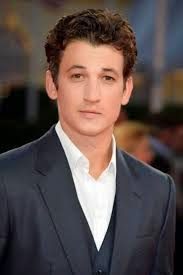
Miles Teller was the reason I was most excited about this film. I’ve had my eye on Miles for a few years. He is one of the most promising young talents in the industry today. He is usually cast in comedies and has recently garnered more attention through his work in the block buster Divergent. However, he usually sticks to lower budget films. His talent jumps off the screen, and he is often a scene stealer. He was easily the most memorable character in Craig Brewer’s Footloose remake, and in 21 & Over and The Awkward Moment. Whiplash is a dramatic jump for Miles, but boy did he make a winning choice with this departure from comedy.


Teller is mind blowing in his portrayal of first year jazz student, Andrew Neiman. He, like many other young ambitious students, wanted to impress the big man on campus (Fletcher) and attempt to become someone great in the jazz world like his idol Buddy Rich. It isn’t long before Conductor Terence Fletcher, played by J.K. Simmons, catches a glimpse of Neiman’s budding talent and offers him a place in his studio band. It soon becomes apparent that Fletcher’s teaching style is quite abusive and overly demanding. Andrew gives his all, which often isn’t good enough for Fletcher.


They butt heads more than they converge on screen, and the fighting becomes physical when Fletcher repeatedly slaps Neiman in the infamous “rushing/dragging” scene where Fletcher threatens to "gut Neiman like a pig" if he sabotages the band. Throughout the film, the audience is faced with the question, “How far is too far to push yourself for greatness?” The problem is that when someone is wrapped up in the moment, they can’t see how far they have slipped down the rabbit hole. Once they do, it is often too far to pull themselves back out. Andrew finds himself in this predicament. He never gives up even when Fletcher consistently demeans and berates each member of the band. He fixates on Andrew, possibly due to his immense potential. We endure numerous tense scenes where Fletcher pushes Andrew to dig deep to unlock a level of commitment that he had not previously reached. During one scene, Fletcher commands everyone to empty the rehearsal room until he whips Andrew into shape and gets him on the exact tempo he is looking for. This takes hours and displays the depth of torture that the band members are subjected to day in and day out without relief. It is here that we realize that Fletcher has leapt so far over the teacher student boundary that he is no longer worthy of the job. We question why he was ever allowed to be alone in a room with these young and impressionable minds.


Throughout the film we see Andrew fall deeper into isolation, obsession and social deprivation. He appears more sullen, depressed and cutoff from the world including his father, friends and his girlfriend whom he had just started dating. He abruptly ends his romantic relationship so that he can fully devote himself to the music, and he moves a mattress down to the basement to sleep a few hours at the foot of his drumset as he can't afford to waste a single second on non-music related activities. He spends all his time practicing drum solos to the point of bruises, blisters and open bloody wounds that he suffers through for his art. 


Unfortunately, his best is not good enough for Fletcher, and he starts to face the frustration of disappointing his mentor on a daily basis. The more Fletcher is disappointed, the harder Andrew pushes himself. We see other band members dismissed due to Fletcher’s intense mood swings and angry outbursts. We endure homophobic slurs screamed out at individuals who fall short of Fletcher’s unrealistic expectations. And we grow ever more uncomfortable as we witness extreme melt downs where Fletcher appears to unravel under the stress of a looming concert for which he is struggling to prepare the band.


We start to realize just how disastrous Fletcher’s abusive teaching style can be when he receives news of the death of a former student. Fletcher tells the band that he died in an accident; however, it is easy to infer that his student took his own life due to the pressure he had on his shoulders as the result of studying under Fletcher. This fatality does appear to shake up Fletcher and questions are soon asked regarding his part in this tragedy. This is a very vital part of the film. It is here that you really question if any of this is worth trading a life for in the end. The toxic environment the students live in day in and day out will most definitely have lifelong effects and in some cases lead to possible addiction, self-destructive life patterns and possibly death for those who succumb to the pressure and the shame of their perceived failure.


Mentors, teachers and coaches often abuse power and over step boundaries in their work. How far is too far? This is the question that we need to keep asking. Some will argue that the risk is worth the reward, if greatness can be reached. However, we are talking about sacrificing vital social relationships, self-confidence, self-esteem and in some instances life. The psychological damage that can occur in these abusive mentoring relationships can have a lifelong impact. Fracturing a young adult’s psyche can cause irreparable damage. Often the student or young adult does not have a firm understanding of the weight of this possible damage. They are not always in a position to make an informed decision regarding their own wellbeing. 


We, as a society, have to start to look at finding healthier ways to teach, to motivate and to encourage young minds. Teachers and coaches will often defend their actions by saying that pushing someone past their breaking point is the only way to unlock an undiscovered or untapped level of their talent or skill. This seems to be a cop out. If coaches can’t find healthier ways to motivate others, then they may not be cut out for that profession. There are healthier ways to challenge and motivate the future stars of the next generations. It may take more time and effort on the coach’s part to figure out ways to encourage players or students to find the fire within, but it would be worth the extra effort, if it meant producing more well-adjusted adults in the future.  It can be extremely difficult trying to heal from a deep trauma, especially one that was inflicted upon you by someone you trusted and idolized. Insults cut the deepest when they come from someone you respect. Those wounds are often never fully healed and can cause lifelong emotional pain that dwells under the surface for many decades.


It is hard to believe that the gentle and kind J. K. Simmons could turn in such an intense, intimidating performance. Simmons tapped in to a new level of his talent for his portrayal of the tyrannical Fletcher. His anger seemed to bound off the screen and shake the room. The audience fell deathly silent during his rage filled rants. The tension between Simmons and Teller is delicious. It leaves you wanting more but also fearing for Neiman’s safety and sanity. Simmons has gained much attention for this role, and it is all well deserved. 


Teller has garnered attention for his portrayal; however, I can’t help but feel that he got short changed on the award circuit. He missed out on nominations for his electric portrayal of Neimen for the Oscars, Golden Globes and SAG awards where Simmons swept all 3. 


It is apparent that Teller poured his heart and soul into this role along with his own blood, sweat and tears (literally!). He performed all his own drumming scenes in the film. The blisters and bruises we see on screen were every bit real for Teller. He practiced to the point of exhaustion for many months in preparation for this film, much like Neiman did in the film to win Fletcher’s approval. Teller’s emotional scenes were exhilarating and were pure perfection. This performance will surely lead to more dramatic roles for Teller. He has earned much deserved respect from fellow academy members, which should carry him a long way over the next several years. This role seems to be a real game changer for Teller.


Whiplash ends on a high note with Andrew finally winning his idol’s approval after an arduous and well fought struggle. Part of me routed for Andrew to come out on top, as he is such a likeable character and endured so much pain throughout the film. However, part of me also recognized that in life most often this situation would have ended in failure and utter disappointment. Every day millions of people strive to meet goals in their life that may never be achieved despite hard work and determination. So often mentors push someone too far past the breaking point that there really is no point of return. It would have been more realistic to see Andrew struggle with defeat and depression and other very realistic ramifications of the torture he endured while under Fletcher's unrelenting reign. It felt good to see him prevail and to have the movie end on a happy note. However, in life things don’t get wrapped up so neatly after enduring such a traumatic experience. 


As a psychologist, my job is to pick up the shattered pieces that are left after devastating encounters such as this and attempt to heal those gaping wounds. The damage is often so deep and so wide spread that it can take a life time of work to repair. In those instances, I can’t help but think that it is not worth pushing someone that far. There have been other reviews that stated that the abuse was justified since Neiman became a success in the end. However, we should not justify the behavior/abuse on the outcome alone. We have to take into consideration the impact of the abuse on each individual that suffers through it. The bottom line is that it should never be acceptable to damage a person’s soul or psyche to the point of fracture. We are all human beings and each deserve basic respect and human decency. Mentors and teachers should never demean, berate or degrade students or step over that boundary for the sake of pushing someone to greatness because the risk of destroying their very being and their essence is NEVER worth that steep price. I also want to point out something here that I think people are over looking. We don't know what happens to Neiman after the film ends. He was impressive at the studio band performance at the end and won approval from Fletcher. However, we don't know if he indeed went on to be greatly successful in the world of jazz. Fletcher's previous star student killed himself after he had moved on from Fletcher's grip and even by Fletcher's standards had achieved something great by performing in a very respectable and established orchestra/symphony. Despite his success, he couldn't deal with the aftermath of what he had endured during his time under Fletcher's thumb. This is more evidence to support the fact that the abuse doesn't lead to desired results even in the best case scenario.


This small independent film is making a giant splash and is winning over audiences worldwide. Whiplash won both the Sundance Top Audience award and the Grand Jury award. Films don’t often win both of those in the same year. This film is truly unique and is irresistible for both audiences and critics. The film won three awards at the 87th Academy Awards, for Best Supporting Actor for Simmons, Best Film Editing and Best Sound Mixing.


This is a must see. You don’t even have to be a jazz lover to appreciate the music in this film. It is an incredibly visceral experience that triggers all the senses! It will leave you dancing in the aisles and cheering in your seat. You will be stomping your feet and bobbing your head along with the beat. It is fun but also extremely intense. The drum solos alone are worth every penny of your admission price. What a wild ride this experience is! 

5 stars out of 5 Devastatingly Intense, Emotionally Provocative, Explosive, Visceral, Mind Blowing, and Gut Wrenching